
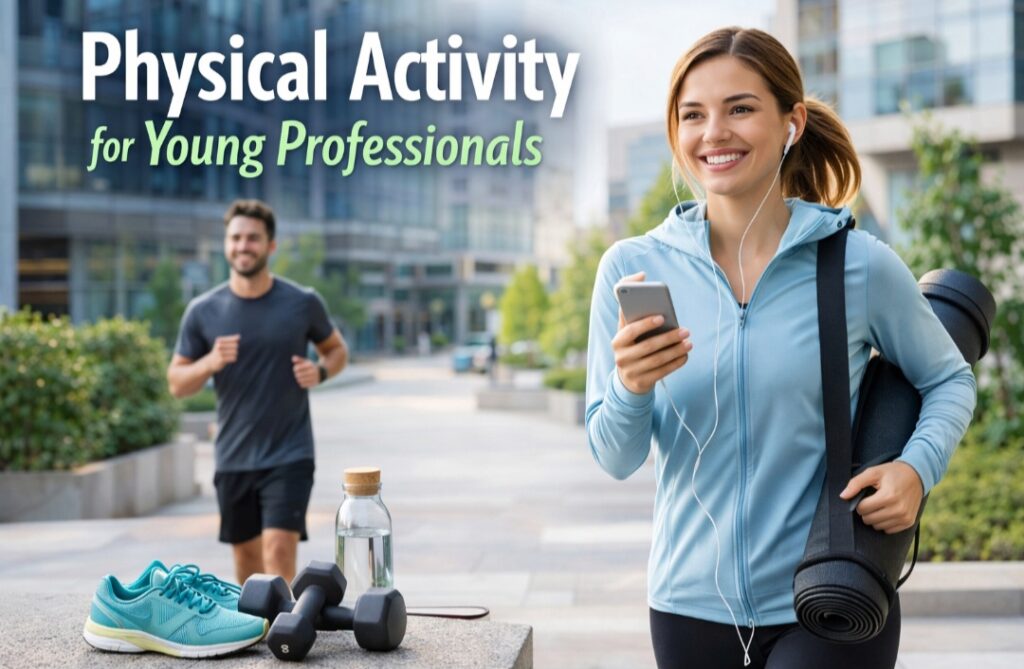
Why Physical Activity Matters More Than Ever for Young Professionals
In today’s professional world, physical activity is often treated as optional — something to fit in “when there’s time.” For young professionals juggling demanding jobs, long commutes, screen-heavy work, and personal responsibilities, exercise frequently becomes the first thing to be sacrificed.
The irony is that physical inactivity doesn’t save time — it costs energy, focus, and long-term productivity.
Regular physical activity is not about aesthetics or extreme fitness goals. It is about:
- Sustaining energy throughout the day
- Reducing stress and mental fatigue
- Improving focus and decision-making
- Preventing lifestyle-related health issues
- Supporting long-term career performance
Movement is not a distraction from professional success. It is a foundation for it.
The Hidden Cost of a Sedentary Professional Lifestyle
Many young professionals spend 8–12 hours a day sitting — at desks, in meetings, in cars, or on couches after work. This sedentary pattern slowly affects the body and mind.
Common consequences include:
- Constant fatigue despite adequate sleep
- Poor posture and back or neck pain
- Weight gain and slow metabolism
- Reduced mental clarity
- Increased stress and anxiety
Over time, lack of movement contributes to serious health risks, including cardiovascular issues, diabetes, and chronic pain — all of which directly impact quality of life and career longevity.
Reframing Physical Activity: It’s Not About the Gym
One major barrier to consistency is the belief that exercise must be intense, time-consuming, or gym-based. This mindset discourages people before they even start.
Physical activity simply means moving your body regularly and intentionally.
It includes:
- Walking
- Stretching
- Bodyweight exercises
- Light strength training
- Sports or recreational movement
Consistency matters far more than intensity.
How Physical Activity Improves Professional Performance
Movement directly affects how you perform at work.
- Increased Energy Levels
Physical activity improves blood circulation and oxygen delivery to the brain, reducing fatigue and sluggishness during the workday.
- Better Focus and Mental Clarity
Exercise stimulates brain chemicals that improve memory, concentration, and learning ability — essential for problem-solving and creativity.
- Stress Reduction
Movement lowers stress hormones and releases endorphins, helping you manage pressure and emotional challenges more effectively.
- Improved Confidence
Feeling physically strong and capable boosts self-confidence, which reflects in communication, leadership, and decision-making.
Types of Physical Activities Ideal for Busy Professionals
Walking: The Most Underrated Exercise
Walking is simple, accessible, and highly effective.
- Walk during phone calls
- Take short walks after meals
- Use stairs instead of elevators
Even 20–30 minutes daily can significantly improve health.
Stretching and Mobility Exercises
Long sitting hours tighten muscles and joints.
- Stretch in the morning or before bed
- Focus on neck, shoulders, hips, and back
Mobility work reduces pain and improves posture.
Strength Training
Strength training builds muscle, supports metabolism, and prevents injuries.
- Bodyweight exercises at home
- Short 20–30 minute sessions
- Focus on major muscle groups
You don’t need heavy weights to see benefits.
Cardiovascular Activities
Cardio improves heart health and stamina.
- Brisk walking
- Cycling
- Swimming
- Light jogging
Choose activities you enjoy to stay consistent.
How to Build a Consistent Fitness Routine With a Busy Schedule
Consistency is the biggest challenge — not motivation.
- Start Small
Avoid all-or-nothing thinking. Even 10 minutes of movement is valuable.
- Schedule Movement Like a Meeting
Treat physical activity as a non-negotiable appointment with yourself.
- Attach Movement to Existing Habits
- Stretch after waking up
- Walk after meals
- Exercise immediately after work
Habit stacking increases success.
- Focus on Frequency, Not Duration
Moving daily for short periods is more effective than long sessions once a week.
Physical Activity and Mental Health
Movement is one of the most effective natural tools for mental well-being.
Regular physical activity:
- Reduces anxiety and stress
- Improves mood and emotional regulation
- Enhances sleep quality
- Builds resilience against burnout
For young professionals facing constant pressure, movement acts as a mental reset button.
Overcoming Common Barriers to Exercise
“I Don’t Have Time”
You don’t need hours. You need intention. Short sessions add up.
“I’m Too Tired”
Fatigue often comes from inactivity. Gentle movement restores energy.
“I’m Not Fit Enough”
Fitness is not a requirement to start — it is a result of starting.
The Role of Rest and Recovery
Physical activity must be balanced with rest.
- Prioritize sleep
- Take rest days when needed
- Avoid overtraining
Recovery is part of progress, not a setback.
Making Physical Activity Enjoyable
Sustainability comes from enjoyment.
- Choose activities you like
- Exercise with friends
- Listen to music or podcasts
- Change routines to avoid boredom
Enjoyment removes resistance.
Long-Term Benefits of an Active Lifestyle
Young professionals who stay active experience:
- Higher energy levels
- Better stress management
- Stronger immunity
- Improved confidence
- Sustainable career performance
Physical activity supports success far beyond the gym.
Physical activity is not about perfection, pressure, or extreme routines. It is about respecting your body and supporting your long-term potential. When movement becomes part of daily life, energy improves, stress reduces, and balance becomes achievable.
For young professionals, staying active is not a luxury — it is a strategic investment in health, performance, and quality of life.